
Streaming has become an important part of gaming, content creation, and online entertainment. Whether you want to broadcast competitive games, share your gameplay on Twitch, upload videos to YouTube, or stream at high resolutions, your hardware can make a major difference. A powerful graphics card helps deliver smooth gameplay, clear video quality, and reliable performance while running multiple applications at once. 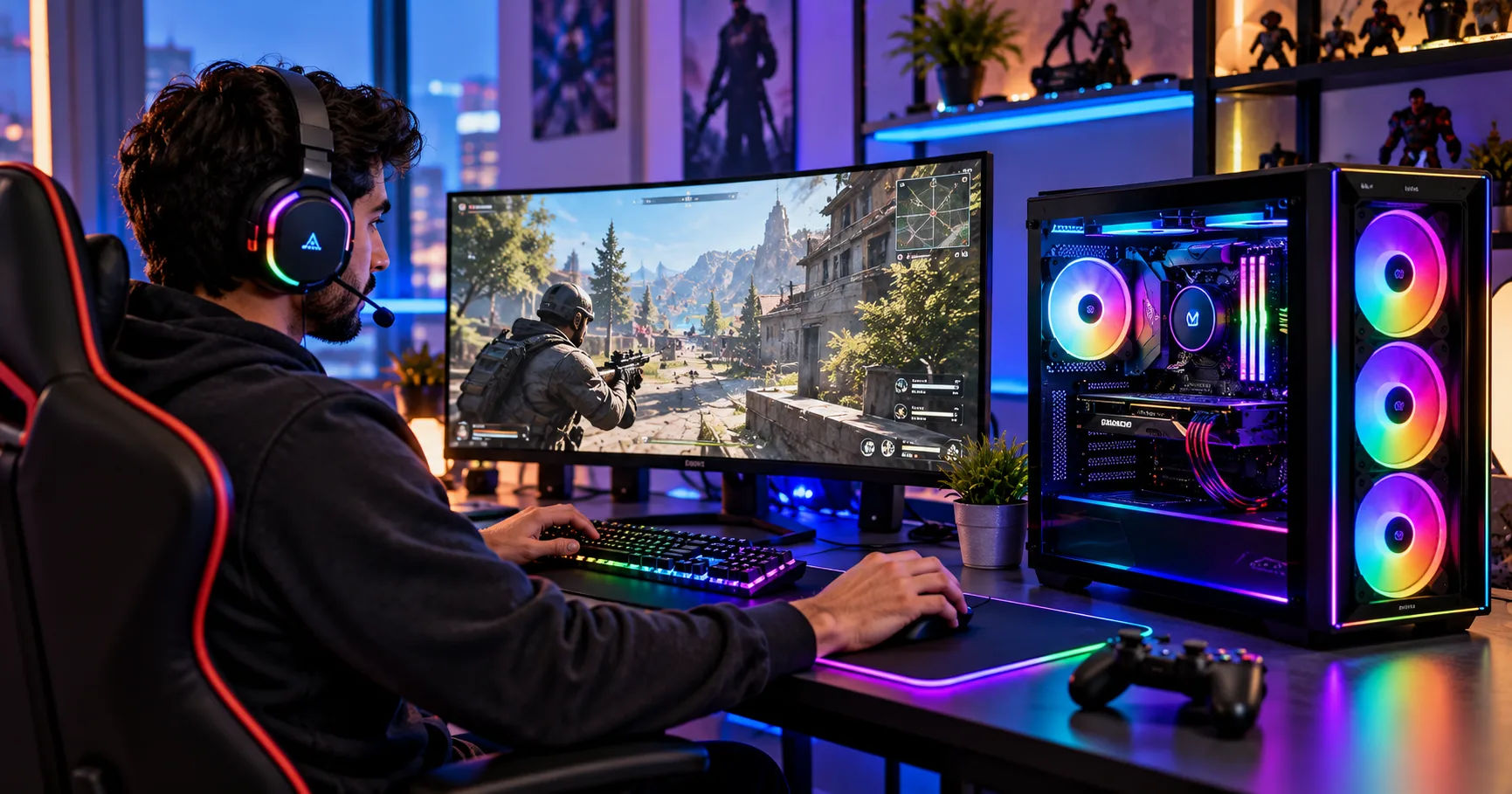 The rtx 5090 32gb is a high-end graphics card designed for demanding gaming and creative workloads. With substantial video memory, advanced rendering capabilities, and modern video encoding features, it is an appealing option for streamers who want premium performance. However, the best streaming setup depends on more than the GPU alone. Your processor, internet connection, streaming software, and recording settings also affect the final result.
So, is this graphics card worth choosing for streaming? The answer is yes for many high-end creators, especially those who want to play demanding games while broadcasting at excellent quality. However, its benefits depend on your content, budget, and performance expectations. Understanding its strengths and limitations will help you decide whether this powerful GPU is the right investment for your streaming setup.
The RTX 5090 32GB for Streaming
The NVIDIA GeForce RTX 5090 is a flagship-class graphics card built on NVIDIA's Blackwell architecture. Its 32GB of GDDR7 video memory gives it considerable capacity for demanding games, high-resolution textures, creative applications, and GPU-intensive workloads.
For streamers, though, raw graphics power is only part of the story. A graphics card must also render the game, encode the outgoing video, and potentially record high-quality footage without causing noticeable performance problems.
A capable GPU can handle these tasks together more effectively than an entry-level card, particularly when the game is graphically demanding.
Why Graphics Performance Matters
When you stream a game, your computer performs several tasks simultaneously. It renders the game world, processes visual effects, captures the screen, and prepares a video stream for broadcasting.
If your hardware struggles with these workloads, you may experience frame drops, stuttering, or reduced game performance.
A powerful GPU provides more headroom for handling demanding graphics settings while supporting a separate encoding workload. This can be especially useful when streaming modern games at 1440p or 4K resolution.
What Does 32GB of VRAM Offer?
Video RAM, commonly called VRAM, stores graphics-related data such as textures, frame buffers, and other rendering resources.
The 32GB capacity of the rtx 5090 32gb is particularly useful for high-resolution gaming, complex creative projects, and workloads that consume large amounts of graphics memory.
However, streaming itself does not automatically require 32GB of VRAM. Many streamers can produce excellent broadcasts with less memory. The additional capacity becomes more valuable when streaming is combined with demanding games, high-resolution assets, video editing, or other GPU-intensive applications.
How the RTX 5090 32GB Handles Live Streaming
Dedicated NVENC Encoding
One of the most important features for streamers is NVIDIA's NVENC, a dedicated hardware video encoder. Instead of relying entirely on the CPU to compress video, NVENC handles encoding through specialized hardware on the graphics card.
The rtx 5090 32gb includes three ninth-generation NVENC encoders. This is particularly useful for creators who stream, record gameplay, or produce multiple video outputs simultaneously.
Because encoding is handled by dedicated hardware, your CPU can spend more resources on game logic, background applications, chat tools, and other tasks.
This does not mean encoding has absolutely no performance cost. Rendering, capturing, and compositing still use system resources. However, hardware encoding is generally a strong choice for gaming streamers who want to maintain smooth gameplay.
Support for AV1 Encoding
AV1 is a modern video codec designed to deliver good image quality at relatively low bitrates. In simple terms, it can preserve more visual detail than older encoding methods at a similar bandwidth, although results depend on the content and encoder settings.
The rtx 5090 32gb supports AV1 encoding, which can be valuable when streaming games with fast movement, detailed environments, smoke, foliage, and particle effects. These scenes can become blurry or blocky when a stream uses limited bandwidth.
NVIDIA's streaming guidance explains that AV1 can improve image quality at the same bandwidth compared with H.264 in suitable streaming scenarios. However, the streaming platform must support the codec for your particular broadcast.
Before selecting AV1 in your streaming software, check the current requirements of your platform and broadcasting settings. H.264 remains useful where compatibility is the priority.
Streaming and Recording at the Same Time
Many creators want to broadcast live while saving a local copy of their gameplay. A recording can be useful for editing YouTube videos, creating short clips, or preserving high-quality footage for future projects.
The rtx 5090 32gb offers substantial encoding capacity for these workflows. Its three encoders can support demanding multi-encode scenarios, although the exact number of simultaneous streams or recordings depends on the codecs, resolutions, frame rates, software, and workload.
For example, you could configure a live stream at 1080p60 and record a higher-quality local file for editing. The recording can use different settings from the live broadcast, provided your software and chosen workflow support them.
This flexibility is especially useful for creators who publish content on several platforms.
Is the RTX 5090 32GB Good for 1080p Streaming?
Yes. The rtx 5090 32gb is more than powerful enough for most 1080p streaming setups, including those that target 60 frames per second.
At this resolution, the graphics card can provide excellent gaming performance while NVENC handles the video encoding. The precise result depends on the game, CPU, software configuration, and selected graphics settings.
Benefits for Beginner and Intermediate Streamers
For a new streamer, 1080p60 is often a sensible starting point. It provides a clear image and smooth motion without requiring the same rendering workload as 4K.
The RTX 5090 can comfortably support this type of workflow in a properly configured computer. However, buying such an expensive graphics card solely for 1080p streaming is difficult to justify.
A more affordable GPU with a capable hardware encoder can often provide a similar streaming experience. You might get better value by investing in a good microphone, camera, lighting, or a reliable internet connection.
Recommended Starting Settings
For a typical 1080p60 broadcast, consider the following general settings as a starting point.
|
Setting |
Suggested approach |
|---|---|
|
Output resolution |
1920 × 1080 |
|
Frame rate |
60 FPS |
|
Encoder |
NVENC |
|
Codec |
H.264 or AV1, depending on platform support |
|
Rate control |
CBR for platforms that recommend it |
|
Keyframe interval |
Commonly 2 seconds where required |
|
Audio |
Clear microphone audio with controlled levels |
These are starting recommendations, not universal requirements. The ideal bitrate, codec, and other parameters depend on the streaming service's current guidelines and your available upload bandwidth.
Is the RTX 5090 32GB Good for 1440p Streaming?
The rtx 5090 32gb is an excellent option for streamers who game at 1440p while broadcasting. This resolution offers a useful balance between visual detail and performance, especially for creators using high-refresh-rate monitors.
Modern games can become demanding at 1440p when you enable ray tracing, high-quality textures, and advanced lighting. A powerful graphics card provides more room to maintain strong gameplay performance while running streaming software.
Why 1440p Is a Strong Choice
Streaming at 1080p while playing at 1440p is a practical option. You can enjoy the sharper image on your own monitor without necessarily sending a higher-resolution broadcast to your viewers.
If your platform supports higher-resolution broadcasts, you can also investigate streaming at 1440p. The benefit is that viewers with compatible displays may see more detail, particularly in games with intricate environments.
However, increasing stream resolution also raises encoding and bandwidth requirements. The platform's limits, audience devices, and the type of content you produce should guide your decision.
Managing High Frame Rates
Competitive games often benefit from high frame rates, but achieving them consistently requires more than a powerful graphics card.
A very high frame rate can increase GPU utilization, leaving less rendering headroom for the streaming application. If the GPU remains fully occupied, OBS Studio may struggle to render and composite scenes on time, even when the video encoder itself is capable.
To prevent this, consider limiting the game's frame rate to a level your system can sustain. Reducing a few demanding graphics settings can also help keep gameplay and broadcast output smooth.
Can the RTX 5090 32GB Stream in 4K?
Yes. The rtx 5090 32gb is well suited to high-end 4K gaming and demanding streaming workflows. Its powerful rendering hardware, 32GB of memory, and multiple dedicated encoders make it an attractive option for creators pursuing high-resolution content.
However, 4K streaming is more complicated than simply selecting a higher resolution.
The Benefits of 4K Streaming
A 4K broadcast can show more detail than a 1080p stream, making it attractive for visually rich single-player games, racing simulators, scenery-focused content, and certain creative demonstrations.
The extra resolution can also be useful when recording footage for later editing. Even if your live broadcast uses a lower resolution, a high-quality local recording can preserve more detail for future content.
The Limitations of 4K Streaming
Higher resolution increases the amount of video data that must be encoded. Your internet upload speed, streaming platform, and chosen codec become especially important.
A powerful GPU cannot compensate for an unstable internet connection or a platform that does not support your preferred output settings.
You should also remember that many viewers watch streams on phones or smaller displays. They may not notice the difference between 1440p and 4K as clearly as someone watching on a large, high-resolution monitor.
For these reasons, 4K streaming makes the most sense when your content and audience can benefit from the extra detail.
Best Streaming Software for the RTX 5090 32GB
Choosing suitable streaming software helps you get the most from your graphics card. Two popular options are OBS Studio and NVIDIA's streaming and recording tools.
OBS Studio
OBS Studio is a flexible choice for streamers who want control over scenes, audio, overlays, recording, and encoding.
With the rtx 5090 32gb, you can configure OBS to use NVENC rather than relying exclusively on software encoding through the CPU. This is especially helpful when streaming demanding games.
Useful OBS features include:
-
Multiple scenes for gameplay, starting screens, and breaks.
-
Separate audio sources for your microphone, game, and other applications.
-
Custom overlays, alerts, and webcam layouts.
-
Independent streaming and recording configurations.
-
Performance statistics for identifying rendering and encoding problems.
NVIDIA provides an official NVENC broadcasting guide with recommendations for understanding codecs, bitrate, frame rates, and OBS configuration.
NVIDIA Broadcast
NVIDIA Broadcast can improve the presentation of your stream using supported AI-powered effects.
Depending on the feature and configuration, it can help reduce background noise, manage microphone audio, blur or replace backgrounds, and apply other camera effects. These tools can make a home streaming setup look and sound more professional.
The rtx 5090 32gb supports NVIDIA Broadcast, but these effects still consume computing resources. Test them alongside your game and OBS configuration rather than assuming every effect is free of performance costs.
Other Hardware You Need for Smooth Streaming
Even the most powerful GPU cannot guarantee a reliable broadcast if the rest of the system is poorly configured.
A Capable CPU
Your processor handles game logic, background applications, and various streaming tasks. Some games are particularly CPU-intensive, especially competitive titles running at very high frame rates.
Pairing the rtx 5090 32gb with a modern, capable processor helps avoid bottlenecks. The best choice depends on the games you play, your target frame rate, and whether you perform additional production tasks.
Sufficient System Memory and Storage
System RAM is separate from GPU memory. It supports the operating system, game, browser, streaming software, and background applications.
A well-equipped gaming and streaming PC benefits from adequate RAM and a fast SSD. Storage capacity matters even more if you regularly save large recordings, particularly at high resolutions and bitrates.
Reliable Internet Upload Speed
Your upload connection affects how reliably your broadcast reaches viewers. A fast download speed does not necessarily mean your upload speed is sufficient.
Use a wired Ethernet connection where possible, and leave bandwidth headroom for other devices and applications. Choose a bitrate that fits your connection rather than pushing it to its absolute limit.
If you experience dropped frames caused by network problems, upgrading your graphics card will not resolve the underlying issue.
Power Consumption, Cooling, and Noise
The rtx 5090 32gb is a high-power graphics card. NVIDIA lists a total graphics power of 575 watts and recommends a 1,000-watt system power supply for its reference configuration. Actual requirements can vary with the specific card model and the rest of your PC.
Choosing the Right Power Supply
Use a high-quality power supply that meets the graphics card manufacturer's requirements. Check connector compatibility and follow the installation instructions supplied with your specific model.
Do not assume that an older power supply is suitable simply because its advertised wattage looks sufficient. System stability and proper cabling matter.
Keeping Temperatures Under Control
Streaming sessions can last several hours, particularly when you play demanding games while recording. Good case airflow and appropriate cooling help the system maintain consistent performance.
A quieter system is also beneficial because microphone recordings can pick up fan noise. You can reduce unwanted noise through careful microphone placement, fan tuning, and sensible case airflow.
The goal is not simply to achieve maximum performance, but to maintain stable performance without excessive heat or distracting noise.
Is the RTX 5090 32GB Worth Buying Specifically for Streaming?
The answer depends on how you plan to use it.
Worth considering for professional creators
If you stream demanding games at high resolutions, record high-quality footage, use advanced visual effects, or run several encoding workloads, the additional GPU power and three encoders can be useful.
Attractive for high-end gaming streamers
If you want excellent gaming performance alongside a high-quality broadcast, the card provides substantial rendering headroom.
Usually excessive for basic streaming
If you mainly stream esports games at 1080p60, a less expensive graphics card can often deliver the encoding quality you need. The money saved may be better spent on audio equipment, lighting, or internet service.
Remember that NVIDIA's ninth-generation NVENC is also available on other RTX 50-series cards. NVIDIA notes that encoder quality is shared across GPUs using the same encoder generation, so buying the flagship does not automatically mean a better-looking stream at identical settings. The RTX 5090's additional encoder capacity and rendering performance are the more relevant advantages for demanding workflows.
Practical Tips for Getting the Best Streaming Quality
Once your hardware is ready, a few simple adjustments can make your broadcast more consistent.
1. Test Your Settings Before Going Live
Run a private or unlisted test where your platform allows it. Check video clarity, audio levels, dropped frames, and game performance.
2. Monitor OBS Statistics
Watch for rendering lag, encoding lag, and network-dropped frames. Each points toward a different potential problem, so diagnosing the cause is more effective than lowering every setting at once.
3. Choose the Right Codec
Use AV1 when your platform and audience support it and it suits your workflow. Otherwise, H.264 can provide broad compatibility.
4. Balance Graphics Quality and Frame Rate
The rtx 5090 32gb has substantial graphics power, but unlimited frame rates can still leave insufficient headroom for streaming. Set a practical frame-rate limit if necessary.
5. Prioritize Audio and Presentation
Viewers may tolerate a slightly lower resolution more readily than distracting microphone noise or inconsistent volume. A good microphone, thoughtful lighting, and a clear stream layout can improve the viewing experience considerably.
Conclusion
The rtx 5090 32gb is an excellent graphics card for streaming, particularly for creators who want to combine demanding gaming with high-quality broadcasts, local recordings, and advanced production features. Its 32GB of GDDR7 memory, powerful Blackwell architecture, AV1 support, and three ninth-generation NVENC encoders make it well equipped for sophisticated streaming workflows.
For 1080p and 1440p streaming, it offers considerably more graphics performance than most streamers need. That extra capacity can be valuable when playing demanding games, using ray tracing, running visual effects, or recording footage while broadcasting. It can also support ambitious 4K gaming and streaming setups when the software and streaming platform allow them.
Nevertheless, the graphics card is only one part of a successful setup. A capable CPU, sufficient system memory, reliable internet upload speed, suitable cooling, and properly configured streaming software are equally important to achieving consistent results.
Budget is another major consideration. If your primary goal is to broadcast ordinary gameplay at 1080p60, a less expensive RTX graphics card may provide similar encoding quality and better overall value. The flagship becomes more compelling when you need its exceptional rendering performance, substantial memory capacity, or additional encoding resources for demanding creative work.
Ultimately, choose the RTX 5090 if you want a premium gaming and content-creation system that can handle demanding workloads beyond basic streaming. If you simply want to start streaming and build an audience, prioritize a balanced PC, clear audio, stable connectivity, and engaging content before spending heavily on the most powerful GPU available.